Posts

Showing posts with the label CSEC Biology

CLIMATE CHANGE & SIDS [CSEC BIO]

Image
CARIBBEAN COUNTRIES AS SIDS  SIDS: Small Island Developing States  " Small Island Developing States (SIDS) are a distinct group of 38 UN Member States and 20 Non-UN Members / Associate Members of United States regional commissions that face unique social, economic and environmental vulnerabilities.  [1]   The three geographical regions in which SIDS are located are:  the Caribbean Sea  the Pacific  the Atlantic  the Indian Ocean  the South China Sea.  SIDS were recognised as a special case both for their environment and development at the 1992 United Nations Conference on Environment and Development held in Rio de Janeiro, Brazil.  The Exclusive Economic Zone (EEZ) for each country is the region of surrounding oceans under their control. The EEZ of SIDS are, on average, 26 times the country's land mass.  For this reason, for many SIDS, most of the natural resources that contribute to the country's economy come from the ocean....
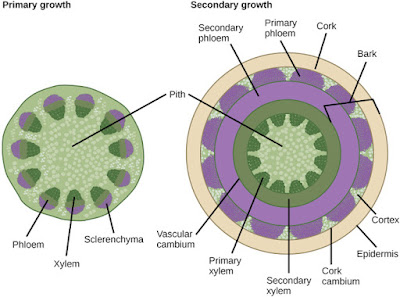
PATTERNS OF GROWTH [CSEC BIOLOGY]

Image
SYLLABUS REFERENCE  [B8.1] ... (Comparison of growth in plants and animals) 

HUMAN REPRODUCTION [CSEC HSB & BIOLOGY]

Image
SYLLABUS REFERENCE  CSEC BIOLOGY  [B9.2] describe the structure & function of the reproductive systems in humans;  [B9.3] describe the menstrual cycle;  [B9.4] outline the mechanism for bringing gametes together, their fusion, and the development of the embryo in humans;  CSEC HSB [B7.2] describe the structure and function of the reproductive systems in human beings;  [B7.3] describe the menstrual cycle;  [B7.4] explain ovulation, fertilisation, implantation, and development of the embryo;  [B7.5] describe the stages of the birth process; 

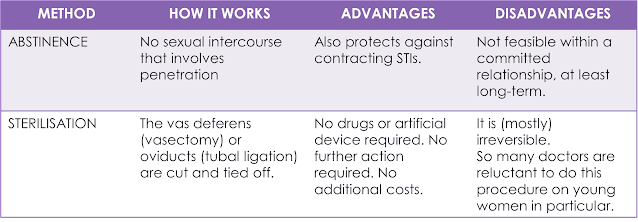
CONTRACEPTION & FAMILY PLANNING [CSEC HSB & BIOLOGY]

Image
SYLLABUS REFERENCE  CSEC BIOLOGY  [B9.5] discuss the advantages and disadvantages of various methods of birth control.  CSEC HSB  [B7.7] explain how birth control methods prevent pregnancy;  [B7.8] discuss the advantages and disadvantages of birth control methods;  [B7.9] discuss the issues related to abortion; [B7.10] discuss the importance of family planning. 

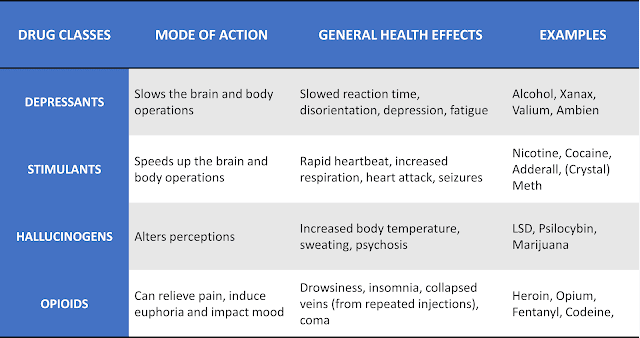
DRUG ABUSE [CSEC HSB]

Image
SYLLABUS REFERENCE  CSEC HSB [D22] discuss the use & misuse of drugs;  [D23] explain the social effects of drug misuse on the individual, family, and community; [B2.11] discuss the effects of smoking.  CSEC BIOLOGY  [B7.8] discuss the physiological, social and economic effects of drug abuse. 

PLANT REPRODUCTION | GERMINATION [CSEC BIOLOGY]

Image
SYLLABUS REFERENCE  [B8.2] describe the structure of a dicotyledonous seed;  [B8.3] describe the processes taking place within a seed during germination;  [B9.7] relate the parts of a flower to their functions;  [B9.8] compare the structure of an insect-pollinated flower and a wind-pollinated flower;  [B9.9] distinguish between the processes of pollination and fertilisation;  [B9.10] explain how fruit and seed formation occur after fertilisation. 

TYPES OF NUTRITION [CSEC BIOLOGY & HSB]

Image
SYLLABUS REFERENCE  CSEC Biology  [B2.1] distinguish among heterotrophic, autotrophic and saprophytic nutrition. 

POPULATION DYNAMICS [CSEC BIOLOGY]

Image
SYLLABUS REFERENCE   [B7.1] discuss the factors that affect the growth and survival of populations including human populations; 

VECTOR-BORNE DISEASES [CSEC BIOLOGY & CSECHSB]

Image
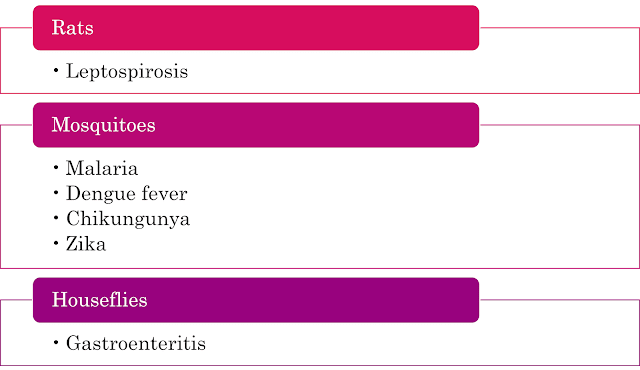
SYLLABUS REFERENCE  CSEC HSB [D12] explain the effect of vectors on human health; [D13] describe the life cycle of the mosquito and housefly;  [D14] discuss mosquito-borne diseases;  [D15] explain the importance & methods of controlling vectors that affect human health.  CSEC BIOLOGY  [B10.2] identify the stages in the life cycle of a mosquito;  [B10.3] discuss the role of the mosquito as a vector in the transmission of pathogenic diseases;  [B10.4] suggest appropriate methods of control of each stage of the life cycle of the mosquito;

BODY'S DEFENSE AGAINST DISEASE [CSEC BIOLOGY & HSB)

Image
SYLLABUS REFERENCE  CSEC HSB [D20] explain the types of immunity; [D21] distinguish between immunity and immunisation; vaccine and vaccination. CSEC BIOLOGY  [B4.5] describe the role of blood in defending the body against disease;  [B4.6] explain how the principles of immunization are used in the control of communicable diseases. 

STIs & HIV/AIDS [CSEC BIOLOGY & CSEC HSB]

Image
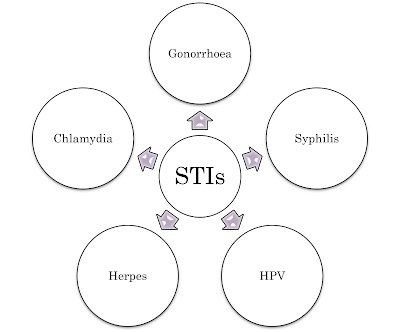
SYLLABUS REFERENCE  CSEC HSB  [D6] discuss sexually transmitted infections (STIs);  [D7] discuss Human Immunodeficiency Virus / Acquired Immune Deficiency Syndrome (HIV / AIDS);  [D8] describe the effect of STIs on the pregnant mother and the foetus. CSEC BIOLOGY  [B10.5] discuss the treatment and control of the four main groups of disease. 

DISEASE SOCIOECONOMIC IMPACT | DEFINITIONS [CSEC BIOLOGY & HSB]

Image
SYLLABUS REFERENCE  CSEC HSB [D11] discuss the impact of diseases on the human population; Important definitions, especially with respect to managing disease in a community.  CSEC BIOLOGY  [B10.6] discuss the social, environmental and economic implications of disease with reference to both plant and animal diseases. 

CHRONIC DISEASES [CSEC BIOLOGY & CSEC HSB]

Image
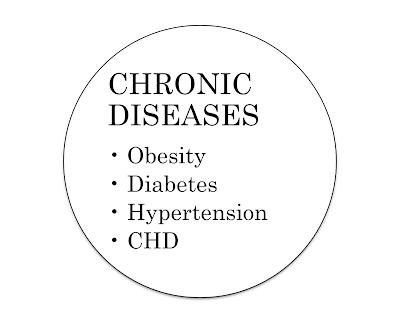
SYLLABUS REFERENCE  CSEC HSB  [D9] discuss chronic / lifestyle-related diseases;  CSEC BIOLOGY  [B10.5] discuss the treatment and control of the four main groups of disease. 

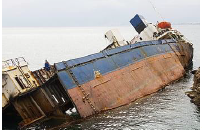
MARINE & WETLAND POLLUTION [CSEC BIOLOGY]

Image
SYLLABUS REFERENCE  [A6.3] assess the implications of pollution of marine and wetland environments; 

HEALTH & DISEASE 101 [CSEC Biology & HSB]

Image
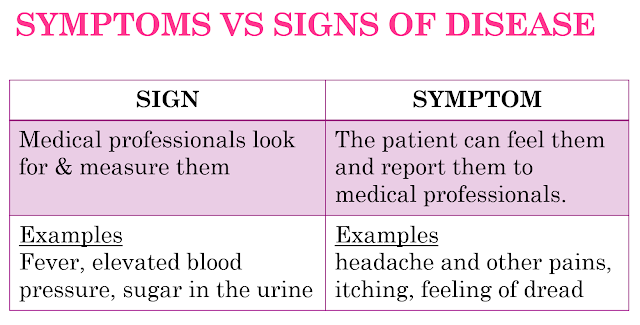
SYLLABUS REFERENCE  CSEC HSB  [D1] define the terms good health and disease;  [D2] classify the types of diseases;  [D3] differentiate between the terms signs and symptoms; CSEC Biology  [B10.1] distinguish among pathogenic, deficiency, hereditary, and physiological diseases; [B10.5] discuss the treatment and control of the four main groups of disease;  [B10.6] discuss the social, environmental, and economic implications of disease with reference to both plant and animal diseases. 

CARDIOVASCULAR SYSTEM [CSEC HSB & BIOLOGY]

Image
SYLLABUS REFERENCE  CSEC Biology [B4.3] describe the structure and function of the circulatory system in humans;  [B4.4] relate the structure of the components of blood to their function;  CSEC HSB [B3.4] relate the structures of red blood cells, phagocytes, and lymphocytes to their functions;  [B3.5] relate the structures of the arteries, veins, and capillaries to their functions;  [B3.6] relate the structures of the heart to their functions;  [B3.7] explain the concept of blood pressure;  [B3.8] describe the structure & function of the circulatory system in humans;  [B3.11] discuss the causes & effects of heart diseases; (brief overview)  

EXCRETION | KIDNEY STRUCTURE & FUNCTION [CSEC HSB & BIOLOGY]

Image
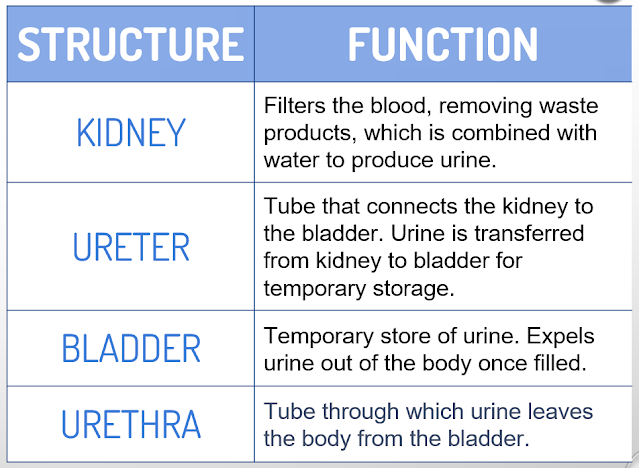
SYLLABUS REFERENCE  CSEC HSB [B1.27] distinguish between egestion and excretion;  [B5.1] explain the importance of excretion in human beings;  [B5.2] explain the roles of the organs involved in excretion;  [B5.3] relate the structures of the kidney to their function;  [B5.8] explain the regulation of water;  CSEC Biology  [B5.1] distinguish between egestion and excretion;  [B5.2] discuss the importance of excretion in living organisms;  [B5.3] state how metabolic wastes are excreted from plants and animals;  [B5.4] relate the kidney to its osmoregulatory and excretory functions. 

MUSCULOSKELETAL SYSTEM [CSEC HSB & BIOLOGY]

Image
SYLLABUS REFERENCE  CSEC HSB  [B4.1] identify the major bones of the skeleton;  [B4.2] relate the structure of the skeleton to its functions;  [B4.7] identify a hinge joint, fixed joint, and ball-and-socket joint;  [B4.9] identify the biceps and triceps of the upper arm;  [B4.10] explain how skeletal muscles function in the movement of a limb;  [B4.11] explain the importance of locomotion to man.  CSEC Biology  [B6.2] relate the structure of the skeleton to its function in humans; [B6.3] discuss the importance of locomotion in animals;  [B6.4] describe the mechanism of movement in a human forelimb.  

PLANT MINERAL NUTRITION [CSEC BIOLOGY]

Image
SYLLABUS REFERENCE  [B2.5] discuss the importance of minerals in plant nutrition using nitrogen and magnesium as examples.

EYE STRUCTURE & FUNCTION [CSEC HSB]

Image
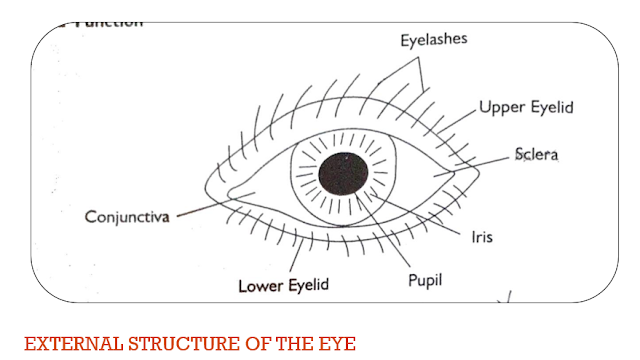
SYLLABUS REFERENCE  CSEC HSB [B6.9] relate the internal structures of the eye to their functions;  [B6.10] explain how images are formed in the eye;  [B6.11] explain accommodation in the eye;  [B6.12] discuss the causes of, and corrective measures for eye defects and diseases.  CSEC Biology  [B7.9] relate the structure of the human eye to its functions as a sense organ;  [B7.10] explain accommodation; sight defects and the corrections of each;