Posts

Showing posts with the label Section A HSB

TYPES OF NUTRITION [CSEC BIOLOGY & HSB]

Image
SYLLABUS REFERENCE  CSEC Biology  [B2.1] distinguish among heterotrophic, autotrophic and saprophytic nutrition. 

FOOD CHAINS, FOOD WEBS ETC... [CSEC BIOLOGY & HSB]

Image
SYLLABUS REFERENCE  HSB [A10] Explain the ways in which other living organisms depend on plants directly or indirectly for food;  [A11] Explain the principles of a food chain and food web;  CSEC BIOLOGY  [A3.1] identify the relative positions of producers and consumers in food chains; [A3.2] identify from each habitat: a food chain containing at least four organisms;  [A3.3] identify from each habitat: herbivore, carnivore, and omnivore;  [A3.4] identify from each habitat: predator/prey relationships; [A3.5] construct a food web to include different trophic levels;  [A3.6] explain the role of decomposers;  [A4.1] explain energy flow within a food chain or web; 

THE NUTRIENT CYCLES [CSEC BIOLOGY & HSB]

Image
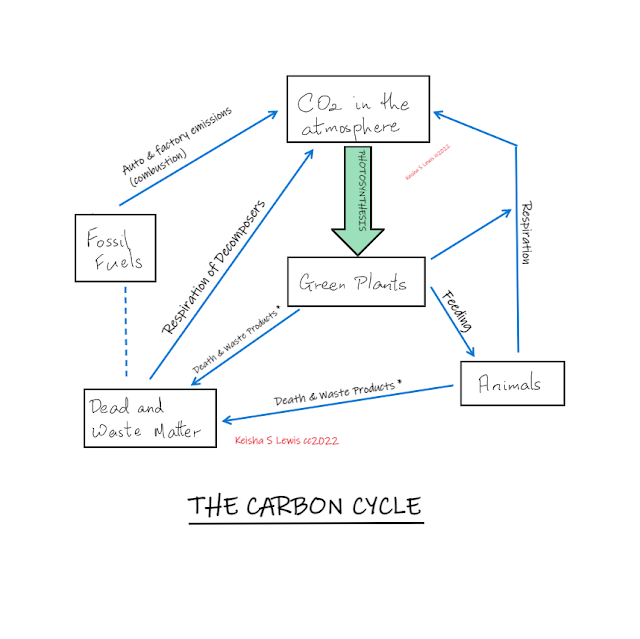
SYLLABUS REFERENCE  HSB [A14] describe the recycling of carbon and nitrogen in nature. 

PHOTOSYNTHESIS [CSEC BIOLOGY & HSB]

Image
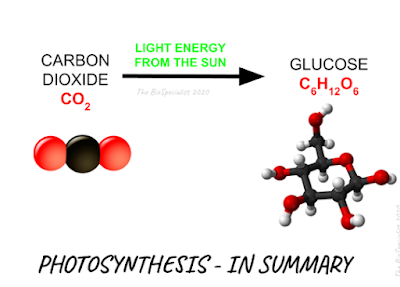
SYLLABUS REFERENCE  HSB [A8] explain the process of photosynthesis; [A9] investigate the effect of light and chlorophyll on the production of starch;  CSEC BIOLOGY  [B2.2] describe the process of photosynthesis in green plants; [B2.3] relate the structure of the leaf of a flowering plant to its function in photosynthesis;  [B2.4] explain how environmental factors affect the rate of photosynthesis;

MEMBRANE TRANSPORT [CSEC BIOLOGY & HSB]

Image
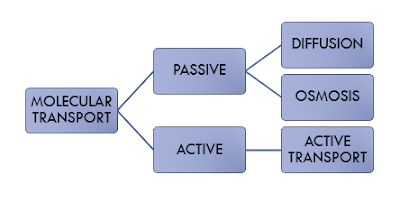
SYLLABUS REFERENCE  HSB  [A6] explain the importance of passive and active transport in living systems; 

SPECIALISED CELLS & STRUCTURAL HIERARCHY [CSEC BIOLOGY & HSB]

Image
SYLLABUS REFERENCE  HSB [A4] identify selected cells which make up the human body;  [A5] explain the importance of cell specialisation in humans;  CSEC BIOLOGY  [B1.5] explain the importance of cell specialisation in multicellular organisms;  SPECIALISED VS UNSPECIALISED CELLS  Unicellular organisms are just one cell in size. These cells are said to be unspecialised or undifferentiated . In unicellular organisms, these cells are independent, carrying out all the life processes by themselves.  Multicellular organisms consist of up to trillions of cells, depending on the organism. In a multicellular organism, there are great differences between cells, even as they have the same basic structure. Each type of cell is specialised to do a specific job, such as feeding, support, communication, or defense.  A specialised cell is a cell that has been changed to carry out a specific job in a multicellular organism. Differentiation / Cell Specialisation is...
STRUCTURE & FUNCTION - CELLS & MICROBES [CSEC BIOLOGY & HSB]

Image
SYLLABUS REFERENCE  HSB [A2] compare the structures of an unspecialized plant and animal cell, and selected microbes [virus, bacteria, fungi] ;  [A3] state the functions of cell structures and organelles; 

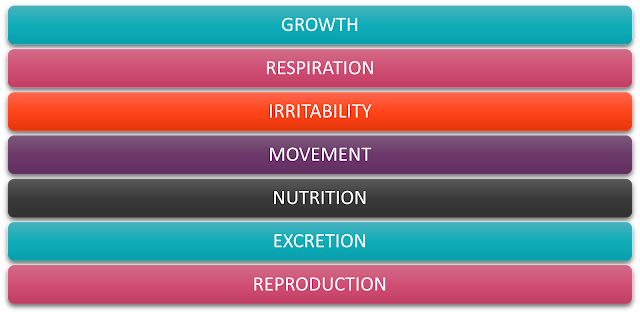
THE CHARACTERISTICS OF LIFE [CSEC HSB]

Image
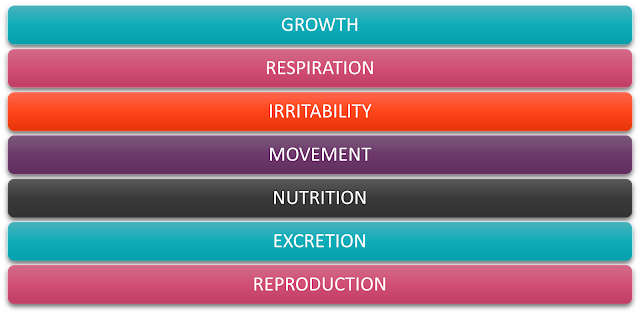
SYLLABUS REFERENCE  [A1] describe the characteristics of living organisms;