Posts

Showing posts with the label Section A Bio

POPULATION DYNAMICS [CSEC BIOLOGY]

Image
SYLLABUS REFERENCE   [B7.1] discuss the factors that affect the growth and survival of populations including human populations; 

MARINE & WETLAND POLLUTION [CSEC BIOLOGY]

Image
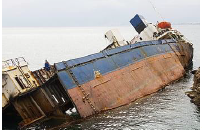
SYLLABUS REFERENCE  [A6.3] assess the implications of pollution of marine and wetland environments; 

ECOLOGY BASICS & FIELDWORK [CSEC BIOLOGY]

Image
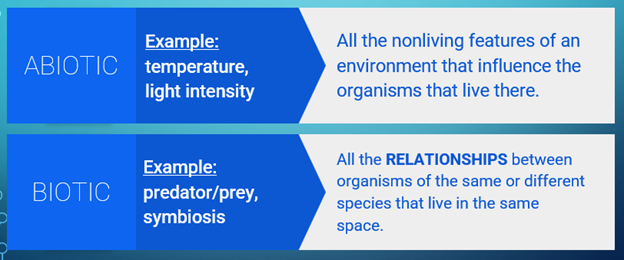
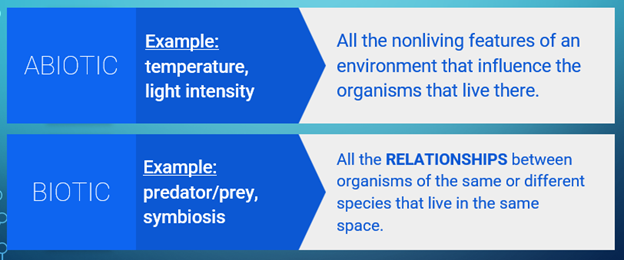
SYLLABUS REFERENCE [A2.1] carry out a simple ecological study using the most appropriate collecting and sampling methods; [A2.2] distinguish between the following pairs of terms:     (a)     abiotic & biotic factors,     (b)     niche & habitat,      (c)     population & community,      (d)     species & population;  [A2.3] discuss the impact of the abiotic factors (soil, water, climate) on living organisms. 
BIOLOGICAL OBSERVATION [CSEC BIOLOGY]

Image
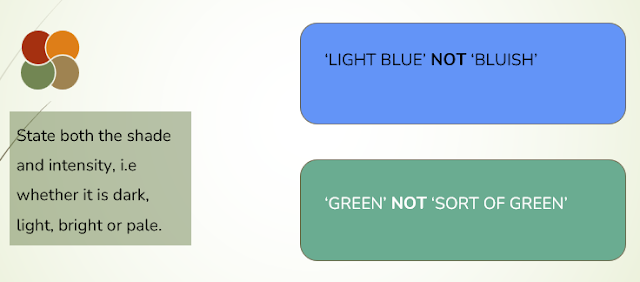
SYLLABUS REFERENCE  [A1.1] group living organisms found in a named habitat based on observed similarities and differences.  Lesson Outcomes  By the end of this lesson, you will be able to: observe living organisms, following the principles of biological observation; describe living organisms and their structures, using appropriate scientific language;  compare organisms, according to the structures observed and described. 

TAXONOMY [CSEC BIOLOGY]

Image
SYLLABUS REFERENCE [A1.1] group living organisms found in a named habitat based on observed similarities and differences;  [A1.2] classify organisms into taxonomic groups based on physical similarities; 

FOOD CHAINS, FOOD WEBS ETC... [CSEC BIOLOGY & HSB]

Image
SYLLABUS REFERENCE  HSB [A10] Explain the ways in which other living organisms depend on plants directly or indirectly for food;  [A11] Explain the principles of a food chain and food web;  CSEC BIOLOGY  [A3.1] identify the relative positions of producers and consumers in food chains; [A3.2] identify from each habitat: a food chain containing at least four organisms;  [A3.3] identify from each habitat: herbivore, carnivore, and omnivore;  [A3.4] identify from each habitat: predator/prey relationships; [A3.5] construct a food web to include different trophic levels;  [A3.6] explain the role of decomposers;  [A4.1] explain energy flow within a food chain or web; 

THE NUTRIENT CYCLES [CSEC BIOLOGY & HSB]

Image
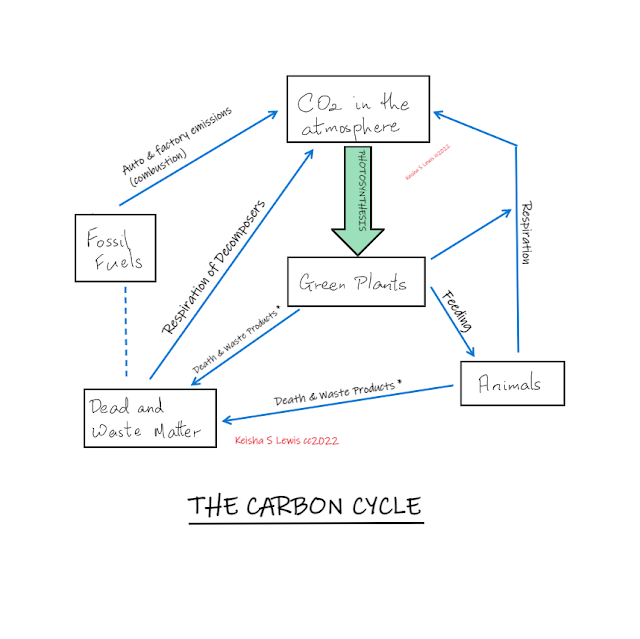
SYLLABUS REFERENCE  HSB [A14] describe the recycling of carbon and nitrogen in nature.