Posts

Showing posts with the label Diseases

HAEMOPHILIA [EXAM QUESTION]

Image
THIS IS AN EXCERPT OF A POST FROM MY 'DELVING DEEPER' SUBSTACK BLOG. YOU CAN READ THE ORIGINAL HERE .  This post is prompted by a question in the CSEC Biology Paper 02 exam, held in January 2017.  Question 3(d) "Suggest ONE reason why haemophiliacs may be more susceptible to infectious disease."  Before we directly answer this question, let's dig into haemophilia itself.  What is Haemophilia? This is a disorder that results in the patient having a reduced ability to make blood clots. It is due to the lack of a particular clotting factor .  A (Mostly) Genetic Disorder  The missing clotting factor is a protein, and thus there is a gene for it. The disorder develops when a mutated form of the gene is present. This mutant gene provides instructions for the synthesis of a defective form of the clotting factor. The defective form does not work properly, and the development of blood clots becomes difficult.  Sex (Gender)-linked  The good news is that the...
VECTOR-BORNE DISEASES [CSEC BIOLOGY & CSECHSB]

Image
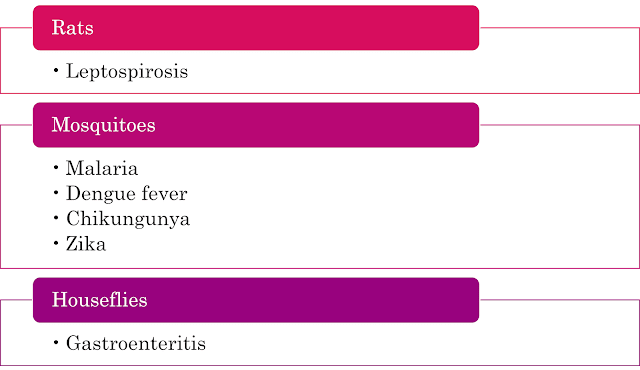
SYLLABUS REFERENCE  CSEC HSB [D12] explain the effect of vectors on human health; [D13] describe the life cycle of the mosquito and housefly;  [D14] discuss mosquito-borne diseases;  [D15] explain the importance & methods of controlling vectors that affect human health.  CSEC BIOLOGY  [B10.2] identify the stages in the life cycle of a mosquito;  [B10.3] discuss the role of the mosquito as a vector in the transmission of pathogenic diseases;  [B10.4] suggest appropriate methods of control of each stage of the life cycle of the mosquito;

BODY'S DEFENSE AGAINST DISEASE [CSEC BIOLOGY & HSB)

Image
SYLLABUS REFERENCE  CSEC HSB [D20] explain the types of immunity; [D21] distinguish between immunity and immunisation; vaccine and vaccination. CSEC BIOLOGY  [B4.5] describe the role of blood in defending the body against disease;  [B4.6] explain how the principles of immunization are used in the control of communicable diseases. 

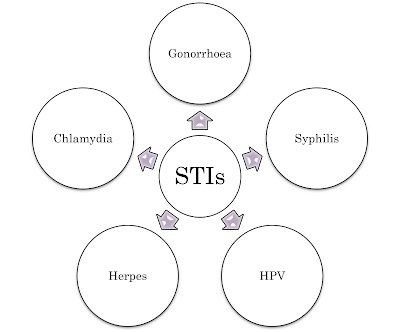
STIs & HIV/AIDS [CSEC BIOLOGY & CSEC HSB]

Image
SYLLABUS REFERENCE  CSEC HSB  [D6] discuss sexually transmitted infections (STIs);  [D7] discuss Human Immunodeficiency Virus / Acquired Immune Deficiency Syndrome (HIV / AIDS);  [D8] describe the effect of STIs on the pregnant mother and the foetus. CSEC BIOLOGY  [B10.5] discuss the treatment and control of the four main groups of disease. 

DISEASE SOCIOECONOMIC IMPACT | DEFINITIONS [CSEC BIOLOGY & HSB]

Image
SYLLABUS REFERENCE  CSEC HSB [D11] discuss the impact of diseases on the human population; Important definitions, especially with respect to managing disease in a community.  CSEC BIOLOGY  [B10.6] discuss the social, environmental and economic implications of disease with reference to both plant and animal diseases. 

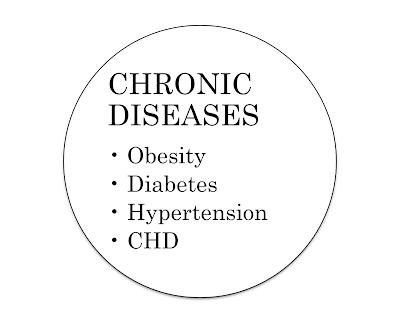
CHRONIC DISEASES [CSEC BIOLOGY & CSEC HSB]

Image
SYLLABUS REFERENCE  CSEC HSB  [D9] discuss chronic / lifestyle-related diseases;  CSEC BIOLOGY  [B10.5] discuss the treatment and control of the four main groups of disease. 

HEALTH & DISEASE 101 [CSEC Biology & HSB]

Image
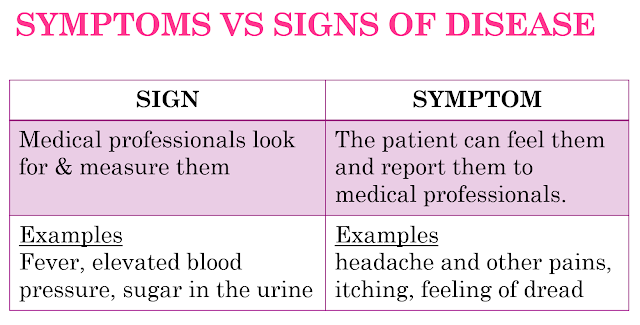
SYLLABUS REFERENCE  CSEC HSB  [D1] define the terms good health and disease;  [D2] classify the types of diseases;  [D3] differentiate between the terms signs and symptoms; CSEC Biology  [B10.1] distinguish among pathogenic, deficiency, hereditary, and physiological diseases; [B10.5] discuss the treatment and control of the four main groups of disease;  [B10.6] discuss the social, environmental, and economic implications of disease with reference to both plant and animal diseases. 

GASTROINTESTINAL DISEASES [CSEC HSB]

Image
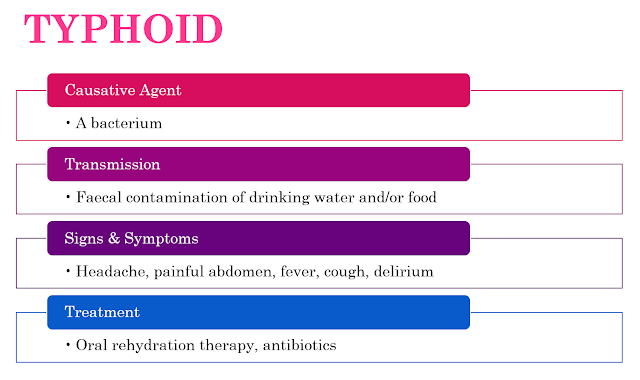
SYLLABUS REFERENCE  CSEC HSB  [D5] discuss gastrointestinal diseases;  [B1.9] describe the causes and effects of constipation and diarrhoea