Posts

BLOOD GROUPS & BLOOD CLOTTING [CSEC BIOLOGY & HSB]

Image
 SYLLABUS OBJECTIVES 

CLIMATE CHANGE & SIDS [CSEC BIO]

Image
CARIBBEAN COUNTRIES AS SIDS  SIDS: Small Island Developing States  " Small Island Developing States (SIDS) are a distinct group of 38 UN Member States and 20 Non-UN Members / Associate Members of United States regional commissions that face unique social, economic and environmental vulnerabilities.  [1]   The three geographical regions in which SIDS are located are:  the Caribbean Sea  the Pacific  the Atlantic  the Indian Ocean  the South China Sea.  SIDS were recognised as a special case both for their environment and development at the 1992 United Nations Conference on Environment and Development held in Rio de Janeiro, Brazil.  The Exclusive Economic Zone (EEZ) for each country is the region of surrounding oceans under their control. The EEZ of SIDS are, on average, 26 times the country's land mass.  For this reason, for many SIDS, most of the natural resources that contribute to the country's economy come from the ocean....

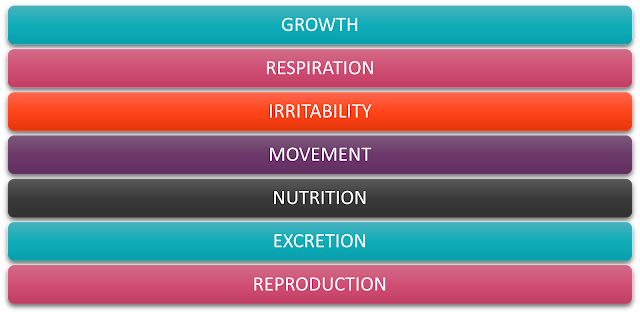
PATTERNS OF GROWTH [CSEC BIOLOGY]

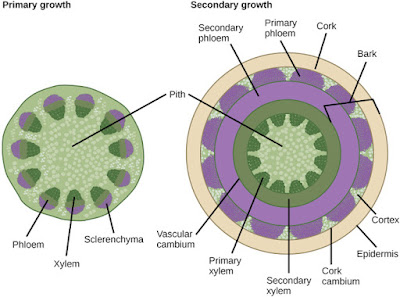
Image
SYLLABUS REFERENCE  [B8.1] ... (Comparison of growth in plants and animals) 

POLLUTION & ITS MANAGEMENT | AIR & NOISE POLLUTION [CSEC HSB]

SYLLABUS REFERENCE  [E1] identify pollutants in the environment; [E2] discuss the causes of … air pollution;  [E3] describe the effects of pollutants on human beings and the environment;  [E4] explain the methods of controlling pollution; 

WATER CYCLE, WATER TREATMENT & WATER POLLUTION [CSEC HSB]

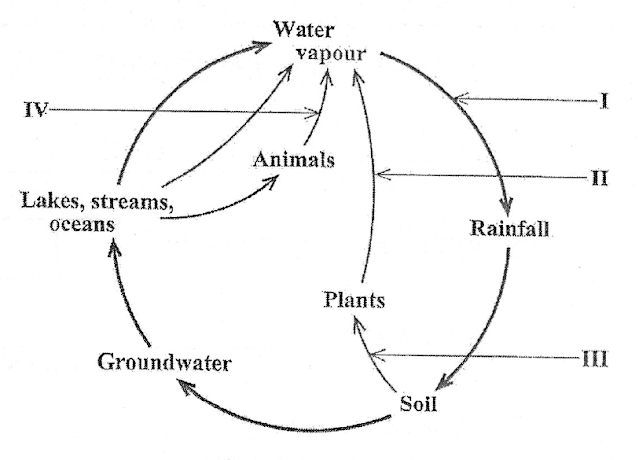
Image
SYLLABUS REFERENCE  [E1] identify pollutants in the environment;  [E2] discuss the causes of water … pollution;  [E3] describe the effects of pollutants on human beings and the environment;  [E4] explain the methods of controlling pollution;  [E5] describe the water cycle;  [E6] describe simple ways of purifying water in the home;  [E7] describe the process of testing water for bacteria; [E8] describe processes involved in large scale water purification;  [E9] discuss the impact of human activities on water supplies;  [E10] explain why contaminated water is detrimental to human beings. 

IMPACT OF THE ENVIRONMENT ON HUMAN HEALTH [CSEC HSB]

SYLLABUS OBJECTIVES  [E21] discuss the impact of environmental issues on humans; 

BREATHING RATE & FACTORS THAT INFLUENCE IT [HSB]

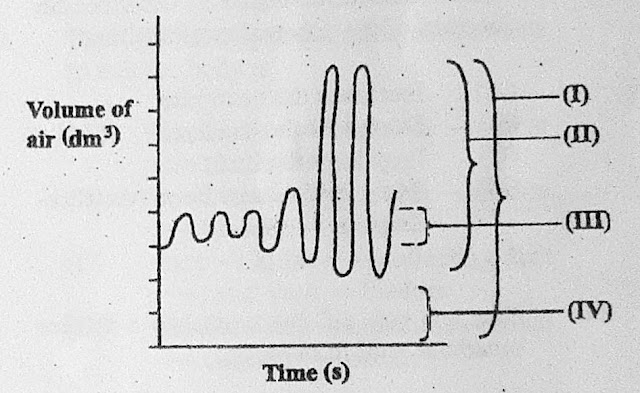
Image
SYLLABUS REFERENCE [B2.4] outline the factors affecting the rate of breathing;  [B2.5] explain the concept of vital capacity; 

THE LYMPHATIC SYSTEM [CSEC HSB]

Image
SYLLABUS REFERENCE  [B3.13] describe the structure and function of the lymphatic system  [B3.14] describe how tissue fluid and lymph are formed 

TRANSPORT SYSTEMS - AN OVERVIEW

Image
SYLLABUS OBJECTIVES  CSEC HSB [B3.1] explain the need for a transport system in the human body; [B3.2] identify the materials which need to be transported around the human body;  CSEC BIOLOGY   [B4.1] explain the need for transport systems in multicellular organisms;  [B4.2] identify the materials which need to be transported in animals & plants; 

WATER CONSERVATION [CSEC BIOLOGY]

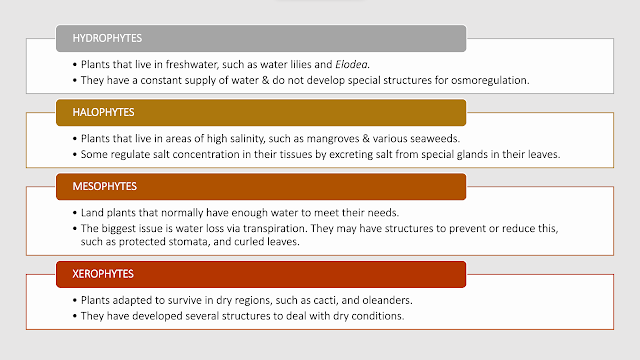
Image
SYLLABUS OBJECTIVE(S) [B4.10] discuss adaptation in plants to conserve water; 

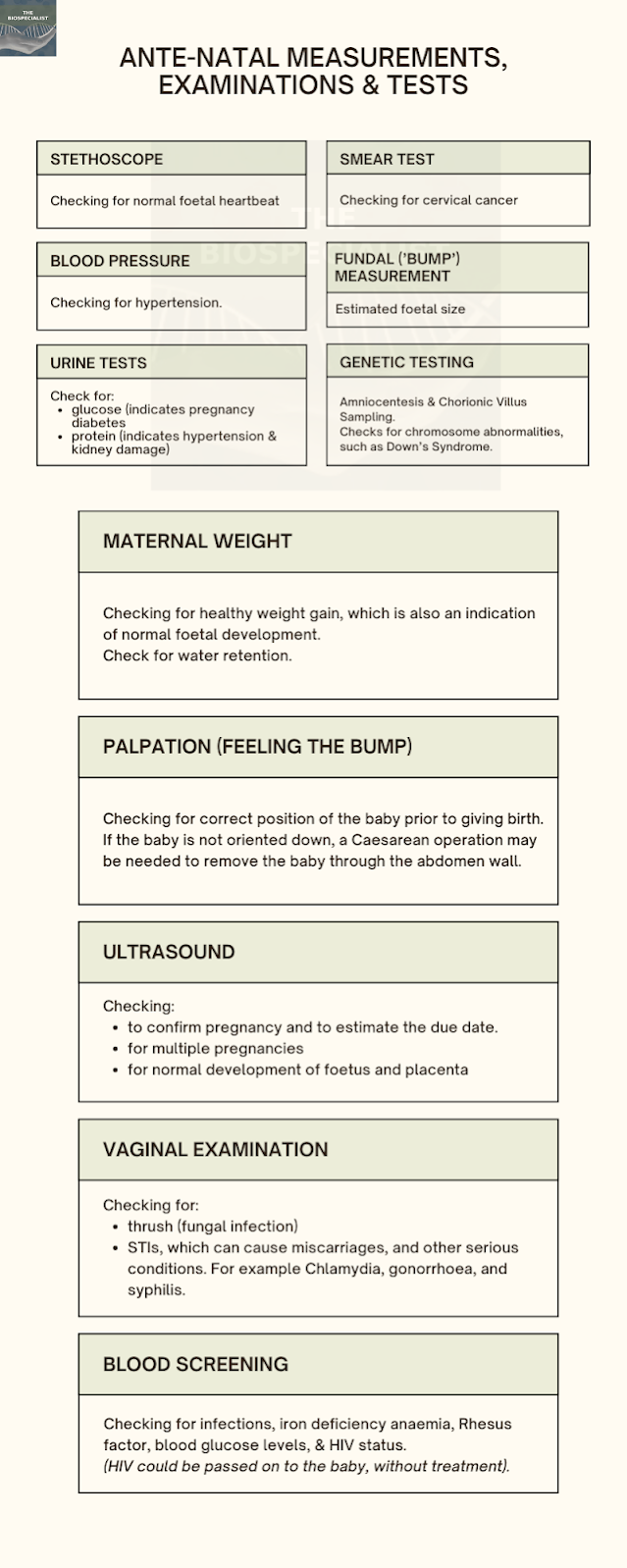
PRE- AND POST-NATAL HEALTHCARE [CSEC HSB]

Image
SYLLABUS OBJECTIVES  CSEC HSB [B7.6] discuss pre-natal/ante-natal and post-natal care for mother and baby; 

HAEMOPHILIA [EXAM QUESTION]

Image
THIS IS AN EXCERPT OF A POST FROM MY 'DELVING DEEPER' SUBSTACK BLOG. YOU CAN READ THE ORIGINAL HERE .  This post is prompted by a question in the CSEC Biology Paper 02 exam, held in January 2017.  Question 3(d) "Suggest ONE reason why haemophiliacs may be more susceptible to infectious disease."  Before we directly answer this question, let's dig into haemophilia itself.  What is Haemophilia? This is a disorder that results in the patient having a reduced ability to make blood clots. It is due to the lack of a particular clotting factor .  A (Mostly) Genetic Disorder  The missing clotting factor is a protein, and thus there is a gene for it. The disorder develops when a mutated form of the gene is present. This mutant gene provides instructions for the synthesis of a defective form of the clotting factor. The defective form does not work properly, and the development of blood clots becomes difficult.  Sex (Gender)-linked  The good news is that the...

HOMEOSTASIS [CSEC HSB]

Image
SYLLABUS REFERENCE [B5.5] explain the concept of homeostasis;  [B5.6] explain the concept of feedback mechanisms;  [B5.7] discuss the regulation of blood sugar;  [B5.9] distinguish between heat and temperature;  [B5.10] discuss the regulation of temperature; 

HUMAN REPRODUCTION [CSEC HSB & BIOLOGY]

Image
SYLLABUS REFERENCE  CSEC BIOLOGY  [B9.2] describe the structure & function of the reproductive systems in humans;  [B9.3] describe the menstrual cycle;  [B9.4] outline the mechanism for bringing gametes together, their fusion, and the development of the embryo in humans;  CSEC HSB [B7.2] describe the structure and function of the reproductive systems in human beings;  [B7.3] describe the menstrual cycle;  [B7.4] explain ovulation, fertilisation, implantation, and development of the embryo;  [B7.5] describe the stages of the birth process; 

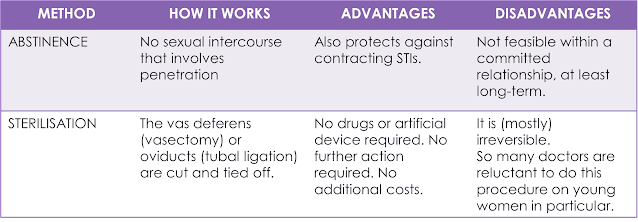
CONTRACEPTION & FAMILY PLANNING [CSEC HSB & BIOLOGY]

Image
SYLLABUS REFERENCE  CSEC BIOLOGY  [B9.5] discuss the advantages and disadvantages of various methods of birth control.  CSEC HSB  [B7.7] explain how birth control methods prevent pregnancy;  [B7.8] discuss the advantages and disadvantages of birth control methods;  [B7.9] discuss the issues related to abortion; [B7.10] discuss the importance of family planning. 

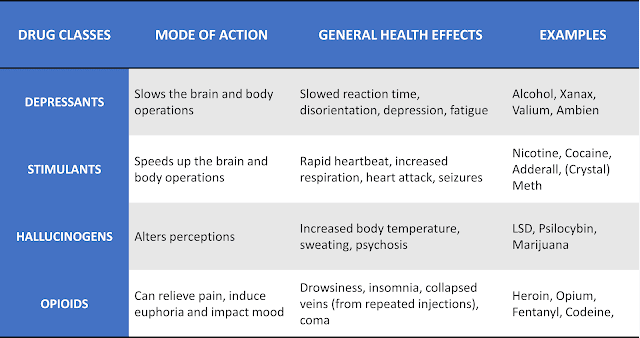
DRUG ABUSE [CSEC HSB]

Image
SYLLABUS REFERENCE  CSEC HSB [D22] discuss the use & misuse of drugs;  [D23] explain the social effects of drug misuse on the individual, family, and community; [B2.11] discuss the effects of smoking.  CSEC BIOLOGY  [B7.8] discuss the physiological, social and economic effects of drug abuse. 

PLANT REPRODUCTION | GERMINATION [CSEC BIOLOGY]

Image
SYLLABUS REFERENCE  [B8.2] describe the structure of a dicotyledonous seed;  [B8.3] describe the processes taking place within a seed during germination;  [B9.7] relate the parts of a flower to their functions;  [B9.8] compare the structure of an insect-pollinated flower and a wind-pollinated flower;  [B9.9] distinguish between the processes of pollination and fertilisation;  [B9.10] explain how fruit and seed formation occur after fertilisation. 

TYPES OF NUTRITION [CSEC BIOLOGY & HSB]

Image
SYLLABUS REFERENCE  CSEC Biology  [B2.1] distinguish among heterotrophic, autotrophic and saprophytic nutrition. 

POPULATION DYNAMICS [CSEC BIOLOGY]

Image
SYLLABUS REFERENCE   [B7.1] discuss the factors that affect the growth and survival of populations including human populations; 

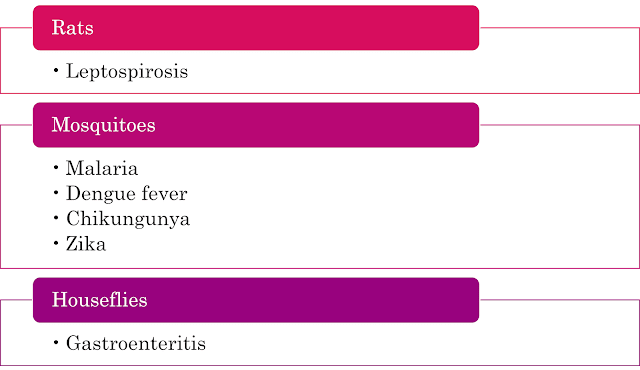
VECTOR-BORNE DISEASES [CSEC BIOLOGY & CSECHSB]

Image
SYLLABUS REFERENCE  CSEC HSB [D12] explain the effect of vectors on human health; [D13] describe the life cycle of the mosquito and housefly;  [D14] discuss mosquito-borne diseases;  [D15] explain the importance & methods of controlling vectors that affect human health.  CSEC BIOLOGY  [B10.2] identify the stages in the life cycle of a mosquito;  [B10.3] discuss the role of the mosquito as a vector in the transmission of pathogenic diseases;  [B10.4] suggest appropriate methods of control of each stage of the life cycle of the mosquito;